

Have you ever noticed your child scratching their skin, feeling irritated, or becoming cranky after wearing a beautiful outfit?
As parents, we often focus on colours, designs, and styles when shopping for our children. However, one of the most important factors we sometimes overlook is the fabric.
Children’s skin can be sensitive to rough textures, heat, sweat, and friction. Choosing unsuitable clothing may cause discomfort, especially when children wear outfits for long hours during festivals, weddings, or family celebrations.
Understanding the Best fabric for children senstive skin can help parents select clothes that are gentle, breathable, and comfortable.
At Stitchkaa, we understand these concerns because our brand was inspired by a mother’s personal struggle to find comfortable festive clothing for her child.
We believe that children should never have to compromise their comfort just to look beautiful.
In this guide, we will explain the Best fabric for children senstive skin, which materials require extra care, how to identify comfortable fabrics, and what parents should check before purchasing children’s clothing.
1. Why Fabric Selection Matters for Children with Sensitive Skin
Children’s skin may react to clothing because of friction, trapped sweat, rough seams, or contact with irritating substances.
For children with eczema or particularly reactive skin, these factors can be especially important.
Choosing the Best fabric for children senstive skin means considering how a material feels and performs during everyday activities.
How Clothing Can Affect Sensitive Skin
Clothing remains in contact with the body for several hours.
If the material is rough, stiff, or poorly breathable, it may increase friction and discomfort.
Heat and perspiration can make irritation worse.
Common Signs of Clothing-Related Irritation
Parents may notice redness, itching, scratching, discomfort around waistbands, or complaints about rough fabric.
However, these symptoms do not always mean a child is allergic to the fabric. Detergents, dyes, eczema, heat, and other skin conditions may also contribute.
Why Breathability Is Important
Breathable fabrics allow air to circulate and can help reduce overheating.
When selecting the Best fabric for children senstive skin, lightweight, smooth materials are often a good starting point.
2. Cotton: One of the Best Choices for Sensitive Skin
Cotton is widely used in children’s clothing because of its softness, breathability, and moisture absorption.
For many children, soft cotton is among the Best fabric for children senstive skin options.
Why Cotton Is Comfortable
Cotton fibres can absorb moisture, while lightweight cotton fabrics often allow good airflow.
This makes cotton particularly useful in India’s warm and humid weather.
Benefits of Cotton Clothing
Soft cotton can reduce friction compared with rougher fabrics and is available in many comfortable weaves.
It is also practical for daily clothing and many traditional outfits.
When Cotton Is Most Suitable
Cotton is especially useful for summer festivals, daytime celebrations, casual outings, and everyday wear.
Stitchkaa’s Cotton Festive Wear
At Stitchkaa, we recognise the importance of comfortable fabrics for active children.
Our festive collections include cotton options such as lehenga cholis, kurta pajama sets, and co-ord sets.
When parents search for the Best fabric for children senstive skin, we want them to find outfits that combine traditional beauty with practical comfort.
3. Mulmul Cotton: A Lightweight and Gentle Fabric
Mulmul cotton is a fine, lightweight cotton fabric known for its soft texture.
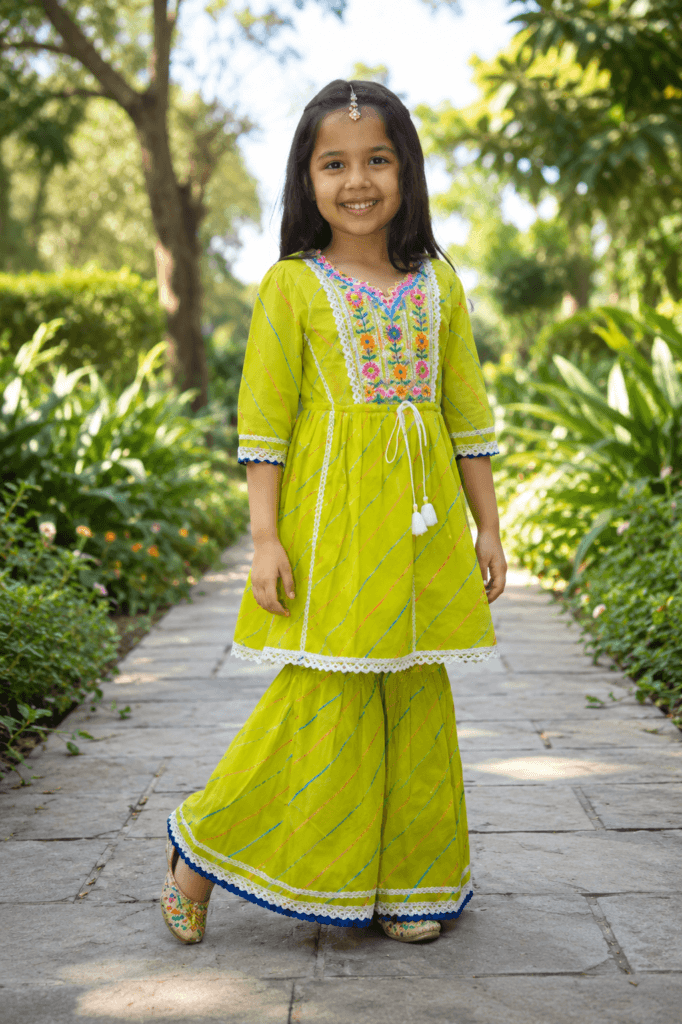
It is one of the fabrics worth considering when searching for the Best fabric for children senstive skin.
What Makes Mulmul Cotton Special?
Mulmul is generally soft, airy, and comfortable against the skin.
Its lightweight construction makes it suitable for children’s festive clothing.
Why Mulmul Is Suitable for Active Children
Children love running, dancing, and playing.
Heavy clothing can restrict these activities, while lightweight fabrics can make movement easier.
Mulmul Cotton for Indian Festivals
Mulmul cotton lehengas and ethnic sets can be practical for Navratri, Diwali, and family gatherings, especially during warm weather.
Stitchkaa’s Approach to Mulmul Cotton
Stitchkaa offers mulmul cotton styles as part of its comfort-focused ethnic wear range.
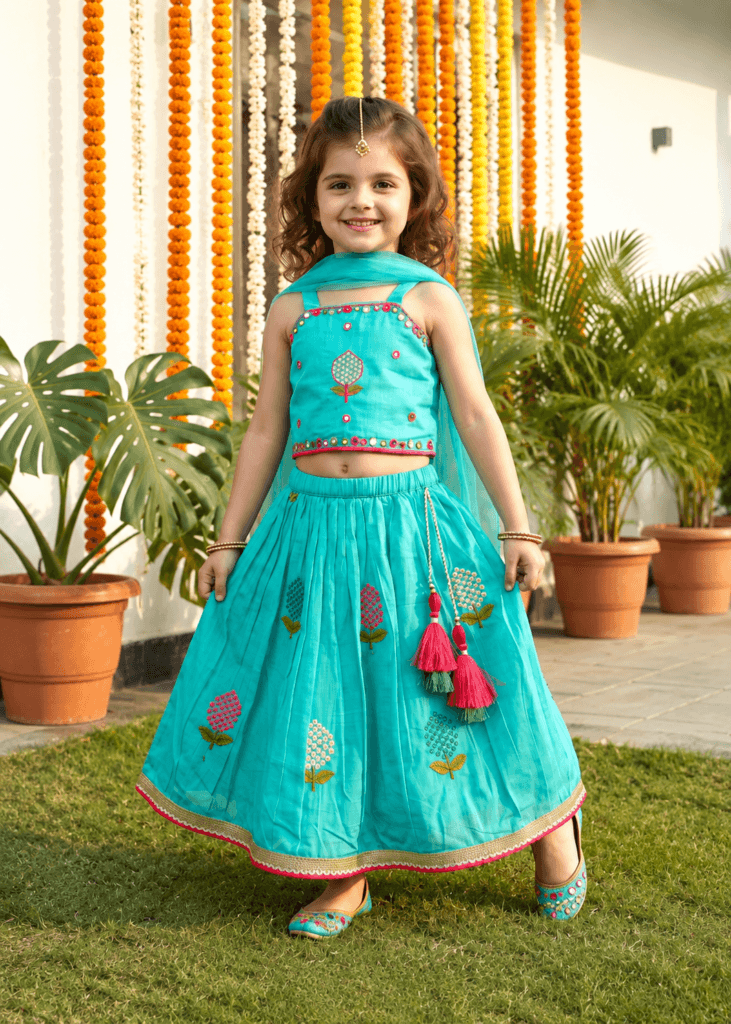
We understand that parents want their children to enjoy festivals without constantly adjusting uncomfortable outfits.
For many families, mulmul is a strong candidate for the Best fabric for children senstive skin, provided the garment’s dyes, lining, and stitching are also suitable.
4. Bamboo Viscose: Softness with Important Considerations
Bamboo-derived viscose is commonly marketed as an exceptionally soft fabric.
Its smooth texture can feel comfortable against the skin.
However, whether it is the Best fabric for children senstive skin depends on the complete fabric construction and finishing.
Why Some Parents Prefer Bamboo Viscose
Bamboo viscose can have a smooth, fluid texture and is often used in children’s sleepwear and casual clothing.
What Parents Should Know
Most fabrics labelled bamboo are processed regenerated cellulose, rather than mechanically extracted natural bamboo fibre.
They should not automatically be considered chemical-free, antibacterial, or medically superior to cotton.
When to Consider Bamboo Viscose
A well-made bamboo viscose garment may be comfortable if it has smooth seams, suitable stretch, and appropriate care instructions.
Always assess the actual garment rather than relying on marketing claims.
5. Silk: An Elegant Option for Special Occasions
Silk is widely associated with traditional Indian celebrations.
It has a smooth surface and a naturally elegant appearance.
However, not every silk fabric is equally suitable for sensitive skin.
Is Silk Suitable for Children?
Some lightweight silk fabrics feel smooth and comfortable, while heavier or stiffer silk fabrics may be less practical.
The Importance of Inner Lining
For children’s ethnic wear, the lining can be as important as the outer fabric.
A soft cotton lining may reduce direct contact between the skin and decorative outer materials.
Silk for Weddings and Festivals
Lightweight silk outfits with suitable linings can be beautiful choices for weddings and family celebrations.
When evaluating the Best fabric for children senstive skin, parents should check the softness, weight, and garment construction instead of choosing silk based only on appearance.
6. Linen: Breathable but Not Always Soft Enough
Linen is a natural fibre known for breathability and moisture management.
It can be comfortable in warm weather, but some linen fabrics feel stiff or textured.
Benefits of Linen
Lightweight, softened linen may offer good airflow and help children remain comfortable in hot weather.
What to Check Before Buying
Not all linen is equally soft.
Coarse or stiff linen may create friction against sensitive skin.
Choosing Linen for Children
Look for pre-softened linen, smooth finishing, and comfortable seams.
Linen can be a useful option, but it is not automatically the Best fabric for children senstive skin for every child.
7. Fabrics to Avoid or Use with Caution for Sensitive Skin
Knowing which fabrics may cause discomfort is just as important as knowing which materials to choose.
While selecting the Best fabric for children senstive skin, parents should be cautious about rough, heavy, or poorly breathable materials.
Importantly, no fabric is universally harmful. The child’s skin condition, the fabric’s construction, and the garment’s finishing all matter.
Polyester and Other Synthetic Fabrics
Polyester is widely used in children’s festive clothing because it is durable, affordable, and versatile.
However, some tightly woven polyester fabrics may trap heat and moisture.
Why Polyester May Cause Discomfort
During hot weather or active celebrations, certain polyester garments may contribute to sweating and overheating.
This can aggravate itching in children whose skin is sensitive to heat and perspiration.
Should Parents Avoid All Polyester?
Not necessarily.
Some lightweight, moisture-managing polyester fabrics are comfortable. Parents should judge breathability, softness, fit, and their child’s response.
Nylon
Nylon is commonly used in linings, decorative clothing, and certain stretch fabrics.
Some nylon garments may feel warm or create friction, depending on their construction.
What Parents Should Check
Avoid stiff or scratchy nylon layers that sit directly against sensitive skin.
Wool and Rough Fabrics
Wool can provide warmth, but coarse wool fibres may feel itchy.
For children with eczema or reactive skin, rough wool directly against the skin may worsen discomfort.
Better Winter Clothing Choices
Choose soft, smooth layers next to the skin and use warmer outer garments when necessary.
Net and Tulle Fabrics
Net and tulle are popular in children’s party dresses and festive lehengas.
However, some varieties have stiff surfaces that may irritate the skin.
How to Make Decorative Fabrics More Comfortable
Look for soft linings that prevent scratchy netting from rubbing against the body.
Heavy Sequins and Embroidered Fabrics
Sequins, beads, and decorative embroidery can make festive clothing beautiful.
However, exposed embroidery backing and rough embellishments may cause friction.
Check the Inside of the Outfit
Turn the garment inside out and inspect the stitching, embellishments, and lining.
When choosing the Best fabric for children senstive skin, the quality of garment finishing matters just as much as the fabric name.
8. Natural vs Synthetic Fabrics: Which Is Better?
Parents often assume that natural fabrics are always safe and synthetic fabrics are always harmful.
The reality is more complicated.
Natural Fabrics
Cotton, linen, and silk are natural fibres.
Many natural fabrics offer comfort and breathability, but their texture and performance depend on the weave, finishing, and garment design.
Synthetic Fabrics
Polyester and nylon are synthetic fibres.
Some may be less comfortable in hot weather, but modern synthetic fabrics can also be lightweight and soft.
Which Should Parents Choose?
For children who are sensitive to heat and friction, soft cotton is often a sensible starting point.
However, the Best fabric for children senstive skin is ultimately the one your child tolerates comfortably.
If a particular material consistently causes irritation, avoid that material and discuss persistent symptoms with a healthcare professional.
9. Fabric Dyes, Chemicals, and Finishing Treatments
Parents should look beyond the fibre itself when purchasing clothing.
Fabric dyes, finishing agents, detergents, and decorative treatments may contribute to skin reactions in some children.
Can Fabric Dyes Irritate Sensitive Skin?
Some children develop contact dermatitis from particular textile dyes or finishing substances.
However, brightly coloured clothing is not automatically unsafe, and pale clothing is not automatically free from irritants.
Wash New Clothes Before Wearing
Washing new garments according to their care instructions may help remove some residual substances and improve softness.
Use Gentle Laundry Products
Fragrance-free detergents may be helpful for children with sensitive skin.
Avoid heavily fragranced fabric softeners if they appear to aggravate irritation.
Do Fabric Certifications Matter?
Independent textile certifications, such as OEKO-TEX STANDARD 100, can provide information about testing for certain harmful substances.
However, certification does not guarantee that a child will never experience an allergic reaction.
Understanding these details is part of choosing the Best fabric for children senstive skin.
10. Why Lightweight Fabrics Matter for Kids’ Festive Wear
During festivals, children are usually more active than adults.
They dance, play, run around, and participate in family activities.
Problems with Heavy Festive Clothing
Heavy garments may restrict movement, increase heat retention, and become uncomfortable during long celebrations.
Benefits of Lightweight Outfits
Lightweight clothing can help children move freely and participate more comfortably in celebrations.
Stitchkaa’s Lightweight Festive Wear
At Stitchkaa, we understand that children should be free to enjoy special occasions.
That is why we focus on offering lightweight ethnic wear in thoughtfully selected fabrics.
Our collections include different styles, colours, and designs, giving parents more options when looking for the Best fabric for children senstive skin.
11. Why Inner Lining and Stitching Matter
Even soft fabric can become uncomfortable when a garment has rough seams or poorly finished closures.
Check the Inner Lining
The lining often sits directly against the skin.
Soft cotton lining can be a practical choice for children’s embroidered ethnic wear.
Examine Seams and Closures
Rough seams, exposed threads, stiff zippers, and tight waistbands can create friction.
Check Embroidery Backing
Decorative embroidery should be properly finished so that rough threads do not rub against the skin.
A comfortable garment requires more than choosing the Best fabric for children senstive skin. Good construction is equally important.
12. Choose Fabrics According to the Season
India’s festivals take place across different seasons.
The most suitable clothing depends on temperature, humidity, activity level, and the event location.
Summer Festivals
Lightweight cotton and mulmul cotton are often excellent options for warm weather.
Winter Celebrations
Soft cotton base layers and comfortable warmer outer layers may help children stay warm without exposing their skin to coarse fabrics.
Monsoon Celebrations
Choose clothing that dries appropriately and does not remain damp against the skin for extended periods.
Indoor and Outdoor Events
Consider air conditioning, humidity, and the length of the celebration.
The Best fabric for children senstive skin should suit both the child’s needs and the environment.
13. How to Test Fabric Comfort Before Buying
Parents can perform a few simple checks before purchasing children’s clothing.
The Touch Test
Feel the fabric against the inside of your wrist.
If it feels rough or scratchy, it may not be comfortable for your child.
The Movement Test
Check whether the garment allows easy bending, sitting, and arm movement.
The Weight Test
Hold the outfit and assess whether it feels excessively heavy for your child’s age and activity level.
The Lining Test
Inspect the inside for rough embroidery, exposed seams, and uncomfortable closures.
The Child Comfort Test
If possible, allow your child to try on the garment briefly.
Ask whether anything feels itchy, tight, or uncomfortable.
These checks are useful when searching for the Best fabric for children senstive skin, although they cannot diagnose allergies or guarantee that irritation will never occur.
14. How Stitchkaa Understands Children’s Fabric and Comfort Needs
Stitchkaa was founded with a simple belief: children deserve festive clothing that looks beautiful and feels comfortable.
Our founder experienced the challenge of finding suitable festive clothing for her own child.
That personal experience inspired a brand focused on comfort, thoughtful fabric selection, and traditional Indian designs.
Thoughtful Fabric Selection
At Stitchkaa, we pay attention to fabrics that support softness, comfort, and ease of movement.
Lightweight Festive Outfits
We focus on offering lightweight ethnic clothing so children can participate in celebrations without unnecessary discomfort.
Wide Variety of Designs and Colours
Every child has a different personality.
Stitchkaa offers a variety of ethnic wear in different colours, prints, fabrics, and styles to suit different preferences.
Festive Wear for Different Occasions
Our range includes outfits suitable for Navratri, Diwali, weddings, birthdays, and family celebrations.
Different Traditional Clothing Options
Parents can explore lehenga cholis, sharara sets, kurta pajama sets, and comfortable ethnic co-ord sets.
Comfort and Traditional Beauty Together
We believe parents should not have to choose between beautiful traditional clothing and their child’s comfort.
Stitchkaa’s approach is to offer thoughtfully selected clothing that addresses these practical concerns.
For parents researching the Best fabric for children senstive skin, understanding fabric texture, garment weight, and lining can make festive shopping easier.
15. Common Mistakes Parents Should Avoid
Choosing clothing for sensitive skin requires attention to more than appearance.
Selecting Clothes Only Because They Look Beautiful
Attractive designs do not guarantee comfort.
Assuming All Natural Fabrics Are Hypoallergenic
Natural fibres can still feel rough or cause irritation in certain children.
Ignoring the Inner Lining
An uncomfortable lining can defeat the purpose of choosing a soft outer fabric.
Buying Tight Clothing
Tight waistbands and restrictive seams may increase friction.
Ignoring the Child’s Feedback
If your child repeatedly complains that an outfit feels itchy, take those complaints seriously.
Avoiding these mistakes can help parents identify the Best fabric for children senstive skin more confidently.
16. Frequently Asked Questions About Fabrics for Sensitive Skin
What Is the Best Fabric for Children with Sensitive Skin?
Soft, breathable cotton is often a good starting point. Mulmul cotton can also be comfortable, especially in warm weather.
The Best fabric for children senstive skin depends on the individual child, garment construction, and any underlying skin conditions.
Is Polyester Bad for Children’s Sensitive Skin?
Not always. Some polyester fabrics can trap heat or feel uncomfortable, but others are soft and designed to manage moisture.
The fabric’s construction and the child’s response are more important than the fibre name alone.
Is Mulmul Cotton Good for Babies and Toddlers?
Mulmul cotton is generally lightweight and soft, making it a practical option for many babies and toddlers when used in appropriately designed garments.
Which Fabrics Should Children with Eczema Avoid?
Rough wool, scratchy materials, and fabrics that trap heat or cause friction may aggravate symptoms.
Children with eczema often benefit from soft, breathable clothing, but individual triggers vary.
Are Cotton Lehengas Suitable for Sensitive Skin?
Cotton lehengas can be comfortable when they have soft linings, smooth seams, suitable fitting, and non-irritating embellishments.
Does Stitchkaa Offer Comfortable Festive Wear for Kids?
Yes. Stitchkaa offers a variety of lightweight festive outfits, including lehenga cholis, sharara sets, kurta pajama sets, and co-ord sets in different fabrics and designs.
Our focus is on helping parents find traditional clothing that combines beauty with practical comfort.
Can Fabric Cause Skin Allergies?
Yes, reactions to certain textile dyes, finishing chemicals, or other substances are possible. However, itching can also result from friction, heat, sweat, or existing skin conditions.
Persistent rashes, severe itching, or suspected allergic reactions should be evaluated by a qualified healthcare professional.
Conclusion: Choose Comfort First with Stitchkaa
Understanding the Best fabric for children senstive skin is an important step towards choosing comfortable clothing for your child.
Soft cotton, mulmul cotton, suitable linings, smooth stitching, and lightweight garment construction can all contribute to a better wearing experience.
Equally important is knowing which fabrics or garment features may cause discomfort, including rough wool, stiff netting, heavy embroidery, and poorly breathable clothing.
At Stitchkaa, we understand these concerns because our journey began with a mother’s search for comfortable festive clothing.
Our mission is to offer thoughtfully selected ethnic wear that allows children to enjoy festivals, weddings, and family celebrations with greater comfort and freedom.
From colourful lehenga cholis to elegant sharara sets and traditional kurta pajamas, Stitchkaa offers a wide variety of festive clothing designed with children’s needs in mind.
Because children should remember the happiness of celebrations, not the discomfort of their clothes.
Explore our collection at www.stitchkaa.com and discover festive outfits that bring together traditional beauty and comfort.
Stitchkaa — Celebrating Traditions with Comfort.